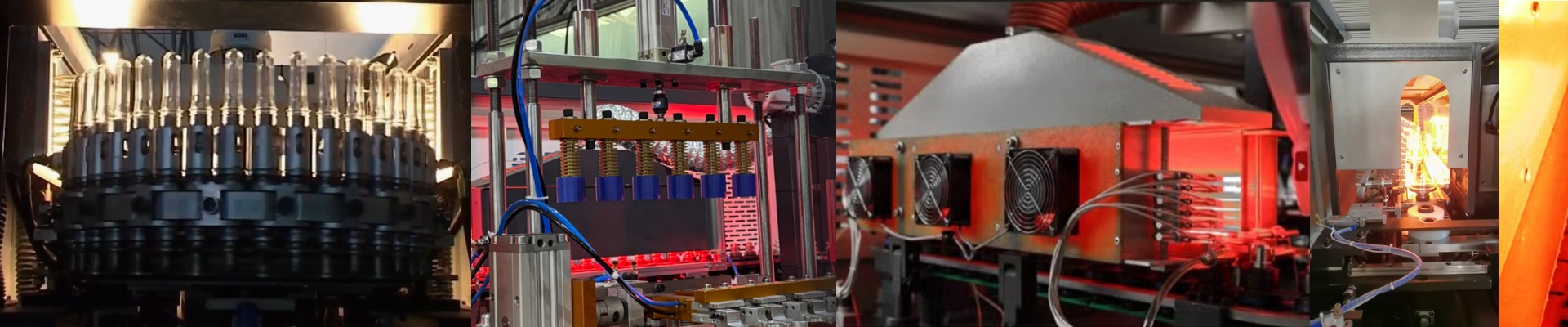
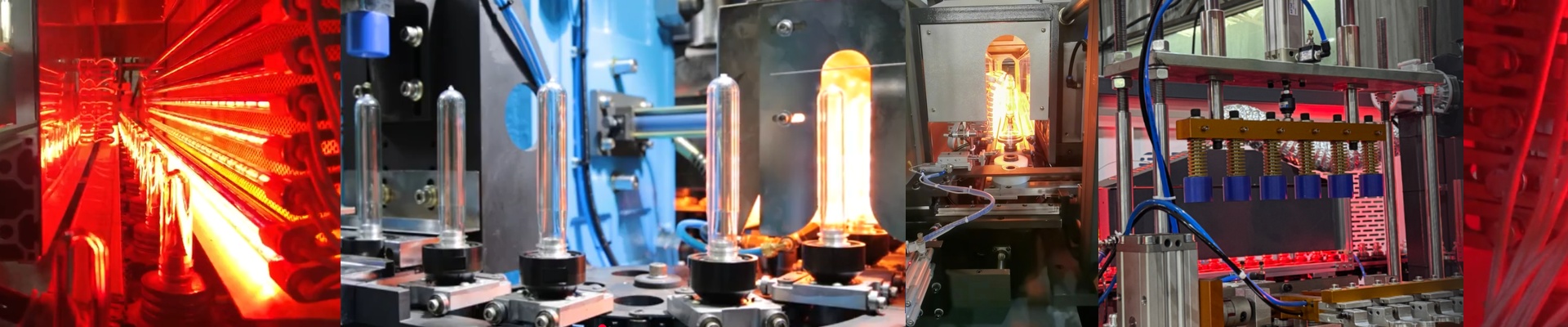

Every stretch blow molding line lives or dies on uptime. When the heating tunnel on your Husky starts drifting, you don’t just bleed seconds per cycle—you lose entire production windows. Uneven preform heating forces you to throttle back speed, then quality slips and scrap starts climbing. Throw in repeated lamp failures and the overtime to swap them, and the hit isn’t just parts. It’s margin.
What actually matters under the hood
Husky infrared heating modules come down to three things: the emitter, the geometry, and the interface. We spec short-wave quartz halogen emitters matched to Husky’s heating-zone power curves, so response is fast enough for high-cavity machines without overshoot. The reflector geometry is set to lay down a uniform heat profile across the preform shoulder and body, and the R7s connector and mounting hardware are dimensioned to drop straight into the original module footprint. In practice, that means repeatable temperature control with less operator fiddling, and a heating section that holds setpoints instead of chasing them.
Why this works on a Husky blow molder
On a Husky, preform heating sets the pace. When the module matches OEM thermal behavior, you can hold tighter temperature spreads across cavities, which cuts thickness variation and stabilizes bottle weight. That means fewer rejects, fewer micro-stops, and a higher stable running speed. The quicker heat-up also shortens warm-up after changeover, and the improved thermal stability keeps the line running at the cycle the machine is built for—without tripping the heating section into over-temp alarms.
The details that make the difference
These modules are engineered as direct-fit replacements, but real-world conditions still matter. If your heating tunnel has heavy dust build-up or the reflectors are pitted, you can still see drift even with fresh emitters—clean the tunnel and inspect reflectors during the swap. Also confirm your power supply matches the module rating; mismatched voltage stresses the lamp and shortens life. After installation, run a short validation window to lock in the setpoints that deliver the lowest scrap and the steadiest output.
ทุกสายการผลิตแบบ stretch blow molding ขึ้นอยู่กับเวลาการทำงานที่มีประสิทธิภาพ เมื่ออุโมงค์ให้ความร้อนบน Husky ของคุณเริ่มเกิดการเปลี่ยนแปลงค่าอุณหภูมิ คุณไม่ได้เสียเวลาเพียงไม่กี่วินาทีต่อรอบเท่านั้น แต่ยังสูญเสียช่วงเวลาการผลิตทั้งหมด การให้ความร้อนชิ้นงานไม่สม่ำเสมอบังคับให้ต้องลดความเร็วลง ทำให้คุณภาพลดลงและของเสียเริ่มเพิ่มขึ้น เมื่อเกิดความล้มเหลวของหลอดไฟซ้ำ ๆ และเวลาทำงานล่วงเวลาในการเปลี่ยนหลอด ไม่ใช่แค่ชิ้นส่วนที่ได้รับผลกระทบ แต่รวมถึงกำไรด้วย
สิ่งที่สำคัญจริง ๆ ภายใต้ระบบ
โมดูลให้ความร้อนอินฟราเรดของ Husky ประกอบด้วยสามองค์ประกอบหลักคือ ตัวปล่อยแสง (emitter), รูปทรง (geometry) และอินเทอร์เฟซ (interface) เรากำหนดสเปคตัวปล่อยแสงควอตซ์ฮาโลเจนคลื่นสั้นที่ตรงกับเส้นโค้งกำลังไฟในโซนความร้อนของ Husky เพื่อให้การตอบสนองเร็วพอสำหรับเครื่องที่มีหลายโพรงโดยไม่เกิดการเกินจุดที่กำหนด รูปทรงของสะท้อนแสงถูกออกแบบให้กระจายความร้อนอย่างสม่ำเสมอทั่วบริเวณช่วงบ่าและตัวชิ้นงาน และขั้วต่อ R7s พร้อมอุปกรณ์ติดตั้งมีขนาดเพื่อให้ติดตั้งตรงกับตำแหน่งของโมดูลเดิมได้ทันที
ในทางปฏิบัติ นั่นหมายถึงการควบคุมอุณหภูมิซ้ำได้โดยไม่ต้องปรับแต่งจากผู้ปฏิบัติงานมาก และส่วนของการให้ความร้อนไม่ต้องไล่ตามค่าที่ตั้งไว้ แต่รักษาค่าที่ตั้งเหล่านั้นได้คงที่
เหตุใดจึงเหมาะกับเครื่องเป่าของ Husky
บนเครื่อง Husky การให้ความร้อนชิ้นงานเป็นตัวกำหนดความเร็ว เมื่อโมดูลตรงตามพฤติกรรมความร้อน OEM คุณจะสามารถควบคุมการกระจายอุณหภูมิระหว่างโพรงได้เข้มงวดขึ้น ซึ่งช่วยลดความแตกต่างของความหนาและทำให้น้ำหนักขวดคงที่ นั่นหมายถึงของเสียลดลง การหยุดงานเล็กน้อยน้อยลง และความเร็วในการรันที่มั่นคงสูงขึ้น
การให้ความร้อนที่รวดเร็วยังช่วยลดเวลาการอุ่นเครื่องหลังเปลี่ยนแม่พิมพ์ และความเสถียรของความร้อนที่ดีขึ้นช่วยให้สายการผลิตทำงานที่รอบเวลาที่เครื่องถูกออกแบบมาโดยไม่ทำให้ส่วนให้ความร้อนเกิดสัญญาณเตือนอุณหภูมิสูง
รายละเอียดที่สร้างความแตกต่าง
โมดูลเหล่านี้ถูกออกแบบให้เป็นชิ้นส่วนทดแทนแบบติดตั้งตรง แต่สภาพแวดล้อมจริงยังคงมีผล หากอุโมงค์ให้ความร้อนของคุณมีฝุ่นสะสมหนาหรือสะท้อนแสงเป็นรอยบุ๋ม คุณยังคงพบการเปลี่ยนแปลงค่าอุณหภูมิได้แม้จะใช้ตัวปล่อยแสงใหม่ — ควรทำความสะอาดอุโมงค์และตรวจสอบสะท้อนแสงระหว่างการเปลี่ยน
นอกจากนี้ต้องตรวจสอบว่าแหล่งจ่ายไฟตรงกับเรตติ้งของโมดูลหรือไม่; แรงดันไฟฟ้าที่ไม่ตรงกันจะทำให้หลอดไฟเครียดและลดอายุการใช้งาน หลังการติดตั้งให้รันการทดสอบยืนยันสั้น ๆ เพื่อล็อกค่าที่ตั้งที่ให้ของเสียต่ำสุดและผลลัพธ์ที่เสถียรที่สุด